
The internet is filled with AI. I may be fine with artificial influencers trying to sell me something with every single reel, but the AI slop has not even spared funny cat videos.
The truth is, it’s all too noisy. And that is why I’m constantly on the lookout for something a bit calmer and easy-going, rather than something that pushes me to work more and faster just for the sake of “improved productivity.”
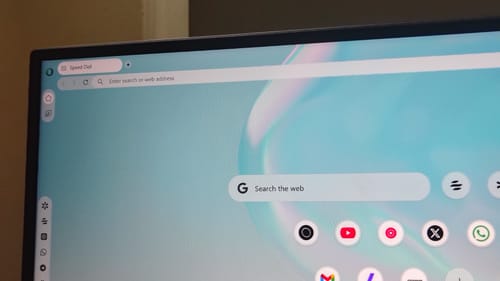
It's especially true for browsers; each one now wants to incorporate “Agentic browsing” into the experience and supercharge my window to the world, even when I don’t want it to. That is why I’ve been happily stuck with Opera Air since its launch.
It is the one browser I’ve been able to use extensively since my ADHD won’t let me stay with anything overwhelming. In all honesty, while it has never replaced Google Chrome for me, it has acted as an antidote. It has introduced me to an intentional friction that made sense, helped calm my senses, and let me breathe.
But I still had some questions about the future of a browser that refuses to induce sponsored tabs or a hyper-stimulating experience. How would it survive in a world where stimulation is everything? I took these questions to Mohamed Salah, the brain behind Opera Air, and found that this “calm” approach is much more calculated than I thought.
Aesthetics as an antidote
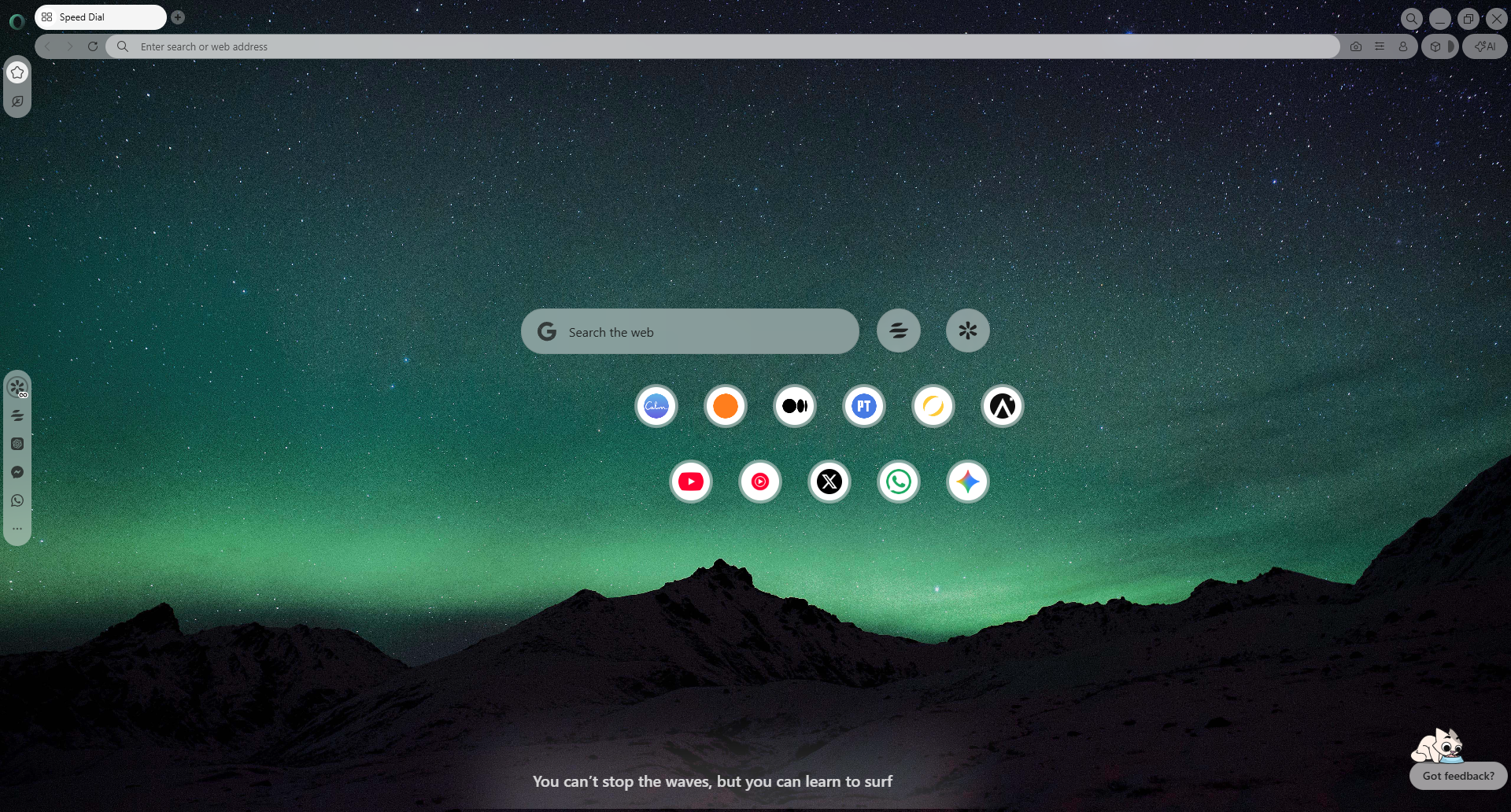
Before we even get into the features, we have to talk about how Air looks. Most browsers are a mess of icons, toolbars, and “news” feeds. Opera Air feels like a deep breath of mountain air.
It’s built on a philosophy of visual minimalism—soft edges, a translucent interface that feels light rather than heavy, and a total lack of visual “shouting.” It doesn’t feel like a tool, but rather a space floating on frosted glass.
When I asked Mohamed why Opera Air exists, his answer was simple: to make sense of people’s lives and schedules.
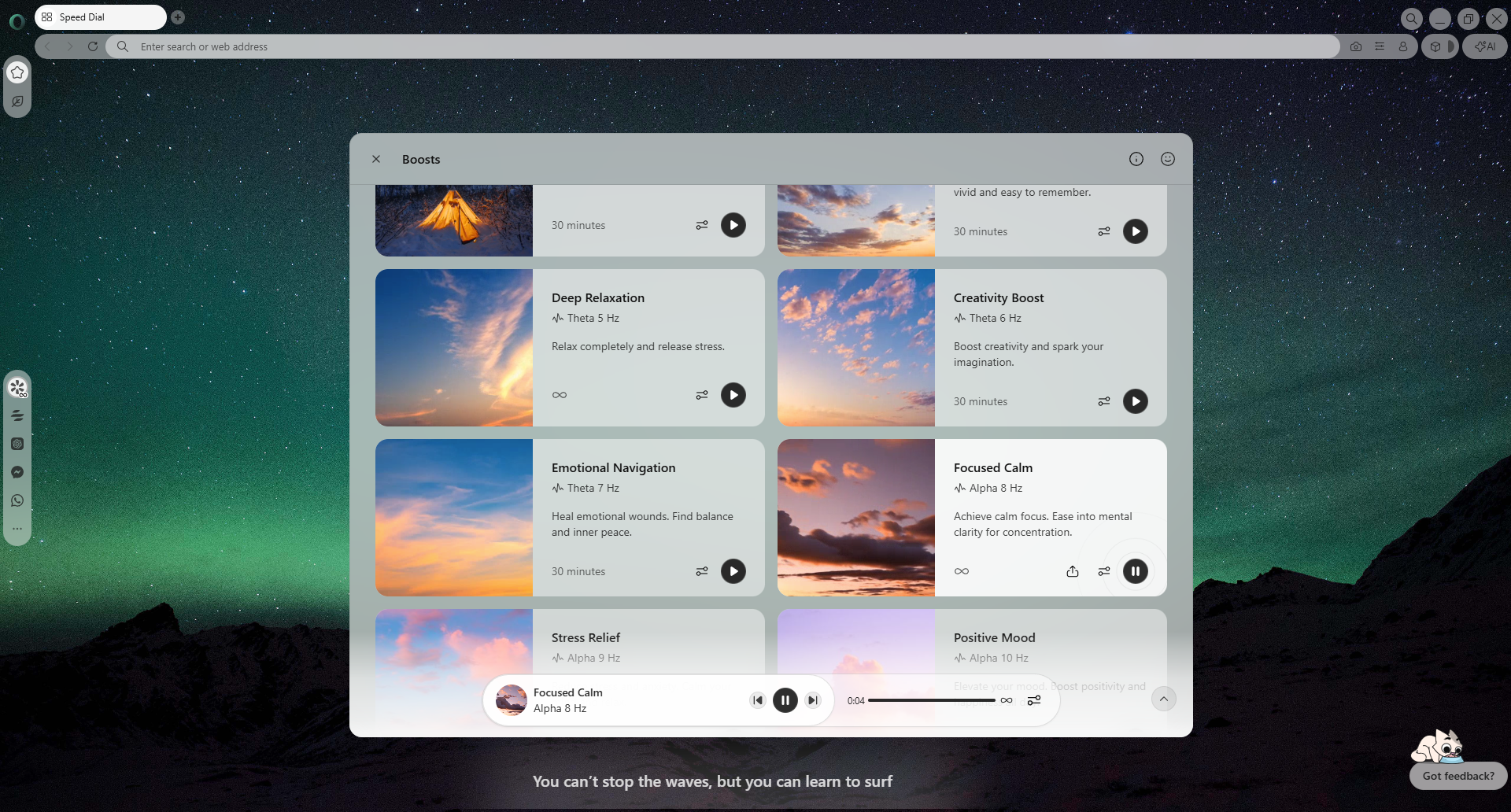
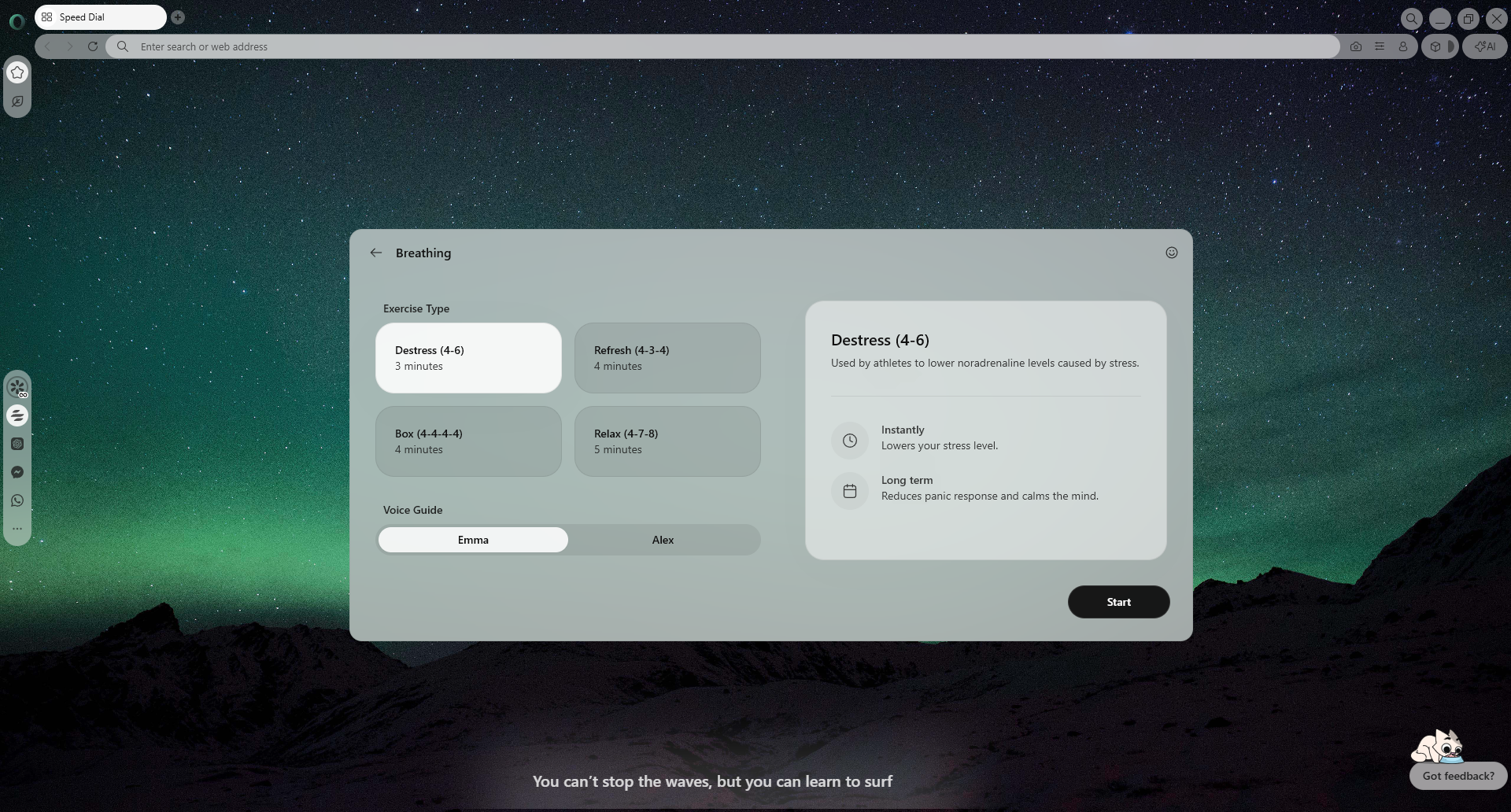
Air was never meant to replace every tool or target a mass market. As Mohamed explained, it was built to ensure we work more mindfully. You can feel this philosophy implemented within the app’s clean, airy design. When you launch it, you aren’t greeted with a cluttered feed, but with two beautifully integrated features: Boost and Take a Break.
- Boost is what replaced Spotify for me. It’s a curated list of binaural sounds that maintain focus without catchy lyrics or ads. It makes sure you stay engaged in your work “mindfully.”
Take a Break is a set of breathing exercises that help you regain focus. Thanks to this, I’ve actually stopped doom-scrolling between tasks and started giving my brain a deserved rest.
A browser for “wellness”
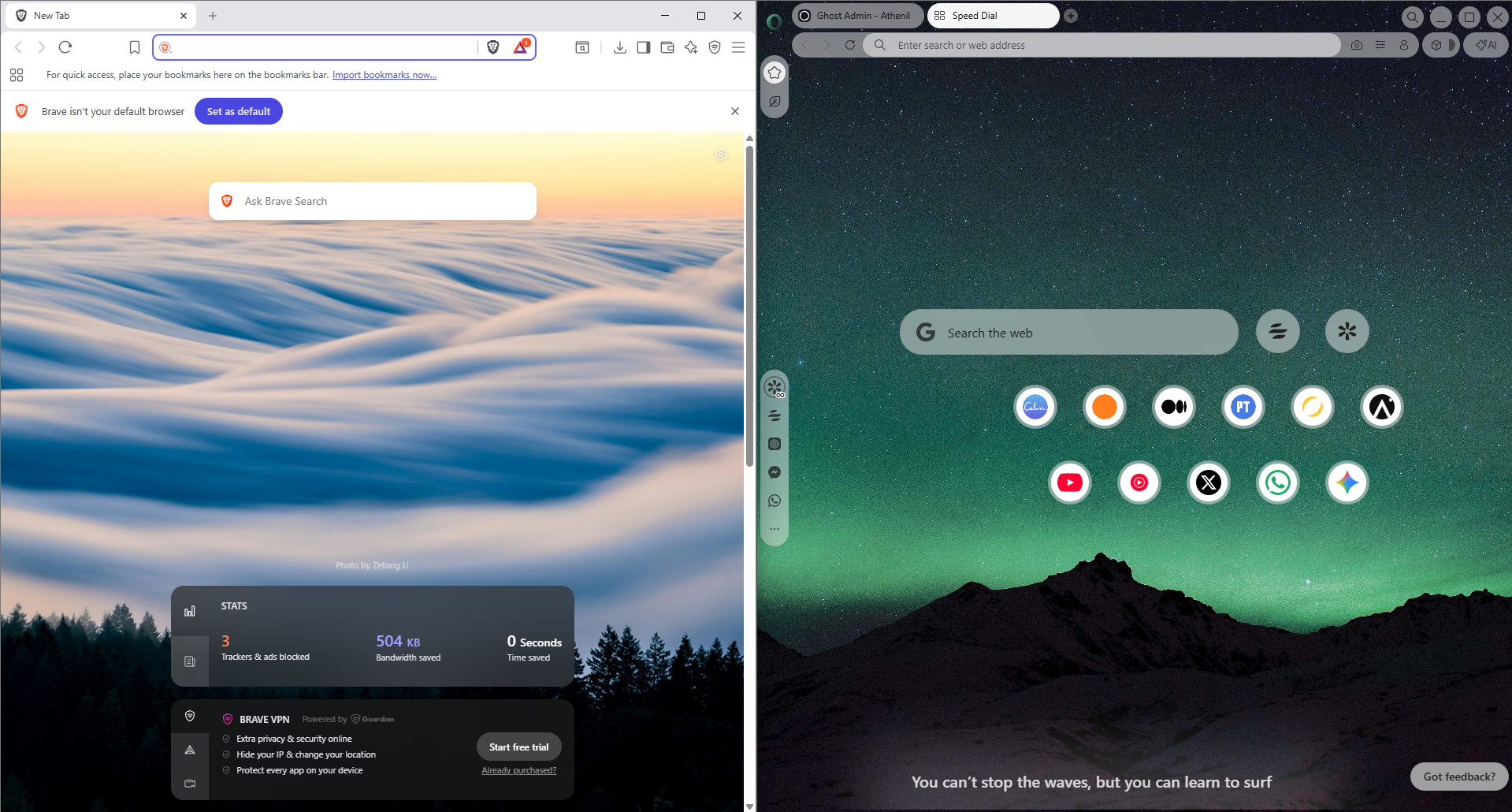
Opera now has a browser for gamers (GX) and power users (One). I asked Mohamed whether these audiences would eventually merge or if the future of browsing would be strictly segmented.
According to him, the “all-in-one” browser might be a thing of the past. Stats show that people are now using two browsers simultaneously. People are willingly trying new tools for specific mindsets. This is why you don’t need to “replace” your default browser to use Air; you can use it specifically as your “break” browser. It’s the place you go when you want to get away from the noise of your “main” workspace.
The road ahead: Mobile and AI
For those wondering if this minimalist experience is coming to other devices, Mohamed confirmed: “Yes, it is.”
A mobile and tablet version is on the way.
And while features like Split Screen are being brought over from the classic Opera, they are being very careful about what makes the cut.
Even the AI integration is different here. In a “mindful” context, Mohamed ensures the AI is a friction-reducer rather than a distraction. Currently, there is no agentic browsing—the AI doesn’t take over your screen or your flow, preserving that clean aesthetic I’ve come to love.
Is it going to stay?
The short answer is: Yes. The hardest part of building Air is intervening against “hostile” web design—ads and auto-play videos designed to disrupt you. Opera Air fights back by limiting options that qualify as features, such as allowing only ten pinned websites. This retains the browser’s beautiful, uncluttered aesthetics intact, no matter how messy the rest of the web tries to be.
Once you start using Air, you realize you don’t need a browser that does everything. You need one that knows when to get out of your way and let you focus on what actually matters.