
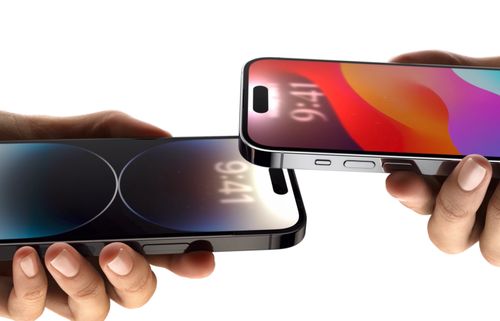
You can now just bring two iPhones close and share contacts
IOS 17 will be out in the coming months. Once installed, it will let you share contacts by just bringing two iPhones (or an Apple Watch) close to each other. Of course, you will feel insanely cool and rich doing it!
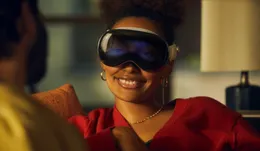
Apple’s new computer wants to sit on your face — Hello, Vision Pro headset!
What looks good when it sits on your face? An Apple mixed reality headset that costs as much as your dream 650cc bike. But the hardware is astonishingly advanced. Have a look:

Fitbit's New Sleep Tracking Device Will Finally Tell You Who's The Real Bed Hog
Fitbit, the master of fitness trackers, has decided to venture into the realm of sleep tracking with their groundbreaking new device. Brace yourselves, folks, because this gadget is going to reveal who the real bed hog is!
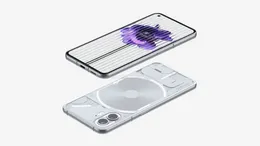
Nothing Phone (2) leak shows barely anything has changed from Nothing Phone (1)
Oh, look, it’s THE transparent phone. Welp, not really. It’s the second baby from Nothing. This is the Nothing Phone (2), baring itself inside out, weeks ahead of launch.
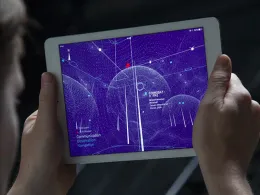
See Your WiFi Signal in Augmented Reality: Now You Can Finally See How Bad It Is!
Step into the fantastical world of AR WiFi visualizers, where WiFi signals come to life before your eyes. Troubleshoot connection issues and find the ultimate router spot with a touch of magic. Prepare to be mind-blown!
Google Search could be smothering your creativity
A Carnegie Mellon University study reveals starting your brainstorming process with Google can be detrimental to the group's creativity.
Teams relying much on search engines often produced inundatingly same, less original ideas due to a cognitive bias called "fixation effect," where seeing popular answers converges our thought process instead of diverging it.
While individuals weren't necessarily dumber with Google, groups of Google users seemed to get stuck in a rut, often coming up with the same common ideas, sometimes even in the same order! Talk about a copy-and-paste creativity crisis.
"This appears to be due to the fact that Google users came up with the same common answers, often in the same order, as they relied on Google, while non-Google users came up with more distinct answers," explained lead author Danny Oppenheimer.
EDITORS' PICKS