
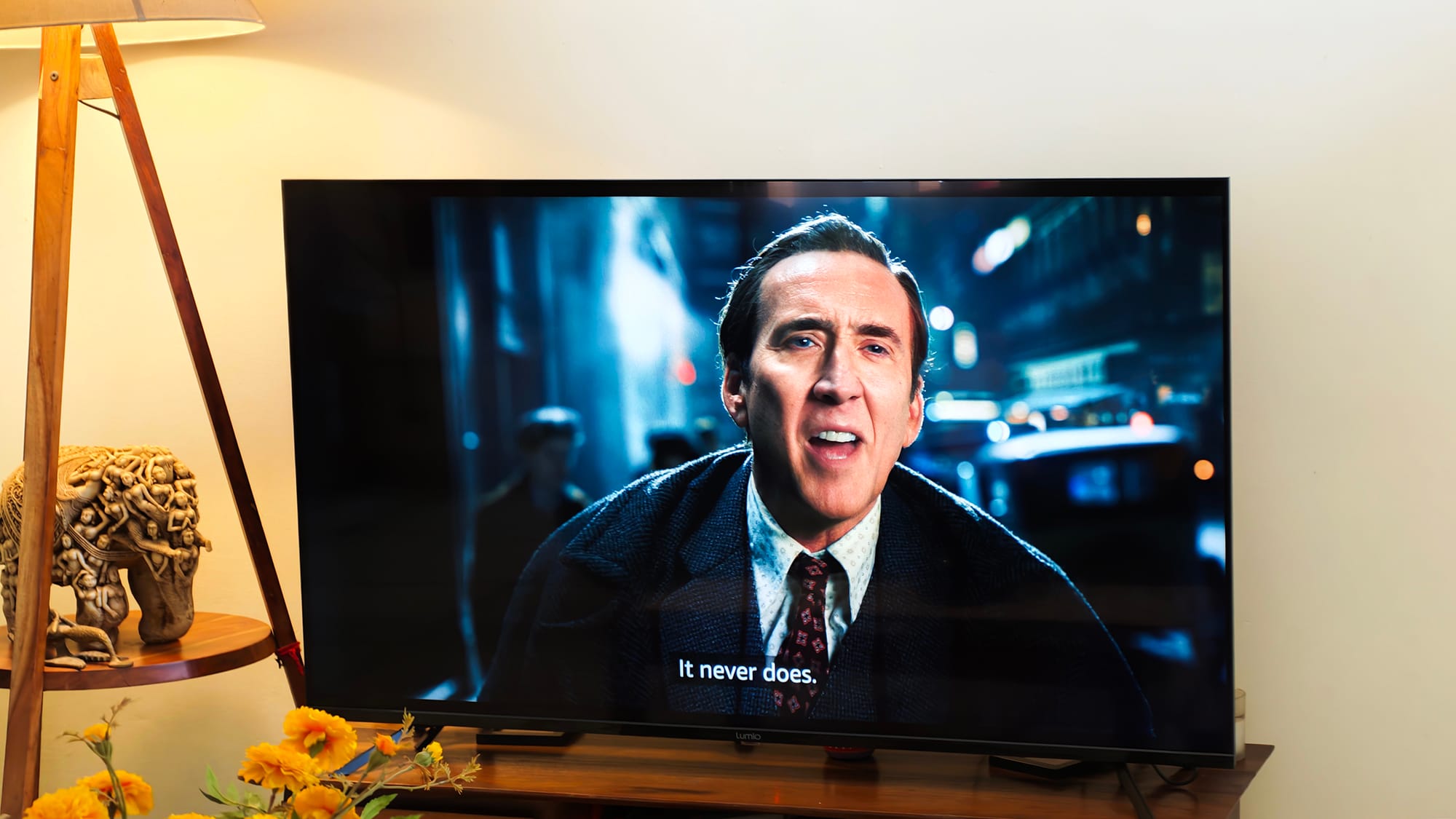
Last week, I sat down for dinner, and as I spent time searching for what to watch, something hit me. I hadn't already finished half of my food, like I usually do, waiting for the TV to boot up and load apps.
The same feeling has continued over the last 10 days I've had with the Lumio Vision 9 (2026), which has quietly reframed what I think about "speed" in reference to a TV.
This is one of Lumio's most ambitious bets yet: a 55-inch QD-MiniLED panel with a 4K 144Hz refresh rate, a 30W audio system, and Android 14 with Google TV. It comes just a month after Lumio launched the bigger 65-inch variant with a better sound system. Apart from those two differences, the sound and the display size, both TVs are identical.
The brand has priced it at ₹51,999 (with an introductory price of ₹44,999), which places it directly against the QD-MiniLED 55-inchers from TCL, Hisense, and Xiaomi.
I've spent my week streaming videos on YouTube, Netflix, JioHotstar, and Prime Video, along with some structured testing. I'm really pleased with the output so far, and here's why I think you should get one for your living room too.
Display wins you over with great colors
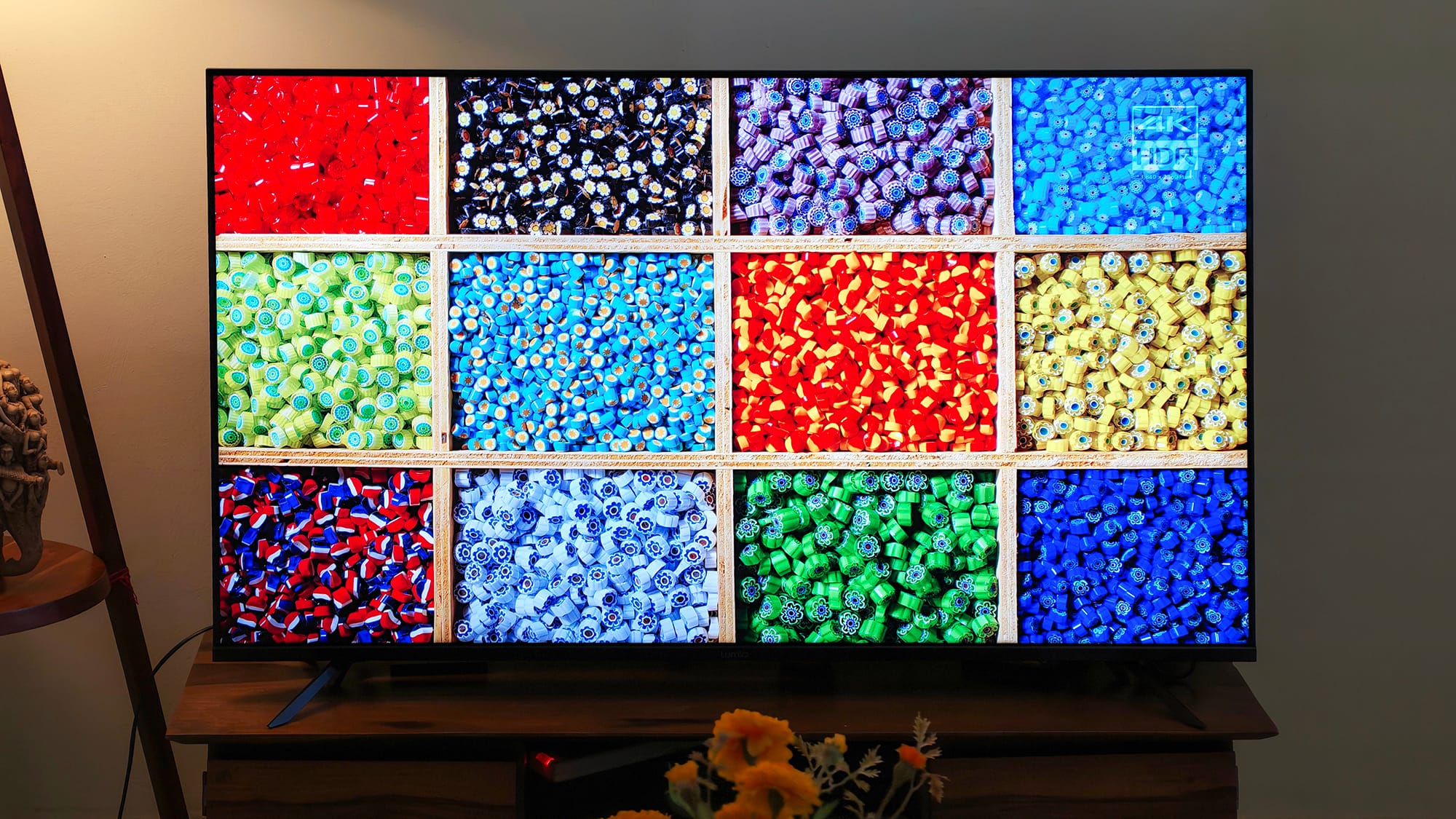
The display is obviously the first thing to note about a TV, and the Vision 9 immediately strikes as impressive.
Headlining the visual experience here is the "EVA" (Enhanced VA) panel, which Lumio says widens viewing angles by 40% compared to a standard VA panel.
There's truth to the claim; visuals stay reasonably consistent at slanted angles, much better than VAs. Pushing it past ~45º, however, lets the familiar VA dullness creep in.
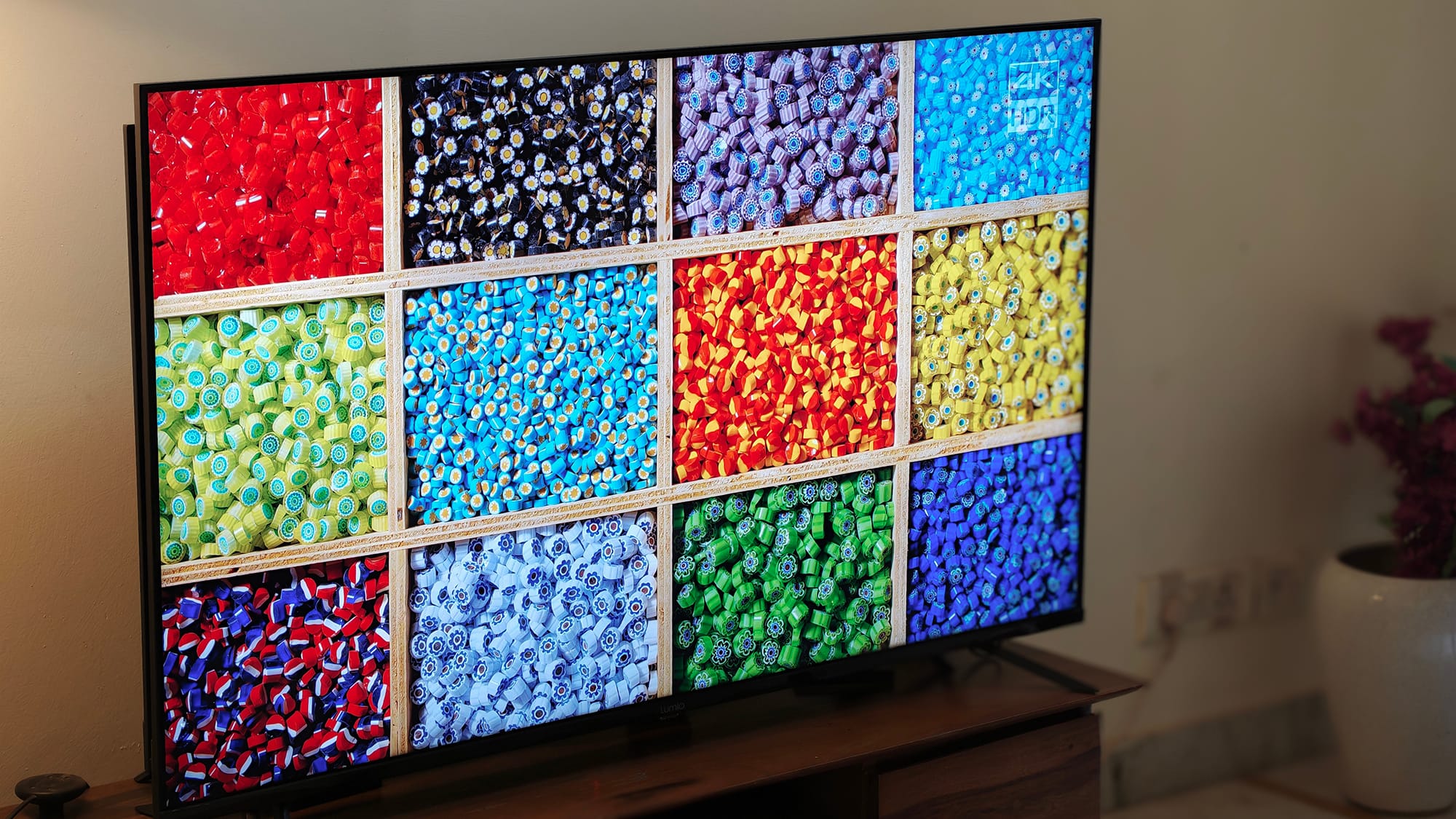
For head-on viewing, though, the trade-off pays off handsomely. The contrast here is genuinely impressive for a non-OLED panel, with dark scenes that look clean rather than washed.
Local dimming behaves well. There's blooming, as there always is on a backlit LED, but it's noticeably better controlled than a typical QLED or LED set and stays confined to small areas of the screen rather than smearing across it.
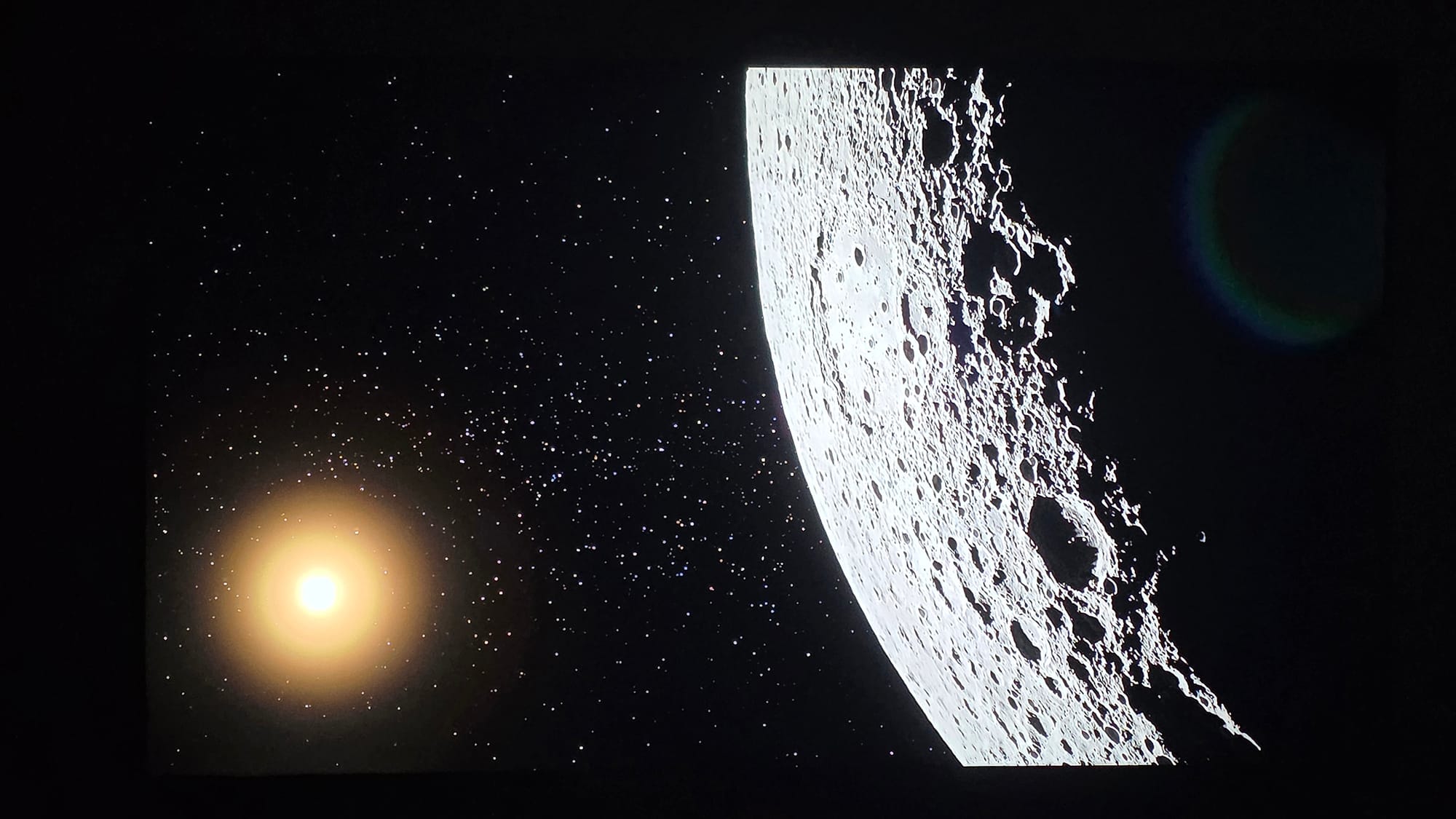
While playing scenes that show the moon in a night sky, the halo shows minimally. Furthermore, there's barely any backlight bleed along the edges.
Along with local dimming, my gradient tests showed pleasant results. The colours blended smoothly into one another with no stair-stepping, and night skies showed none of the boxy banding that plagues cheaper panels.
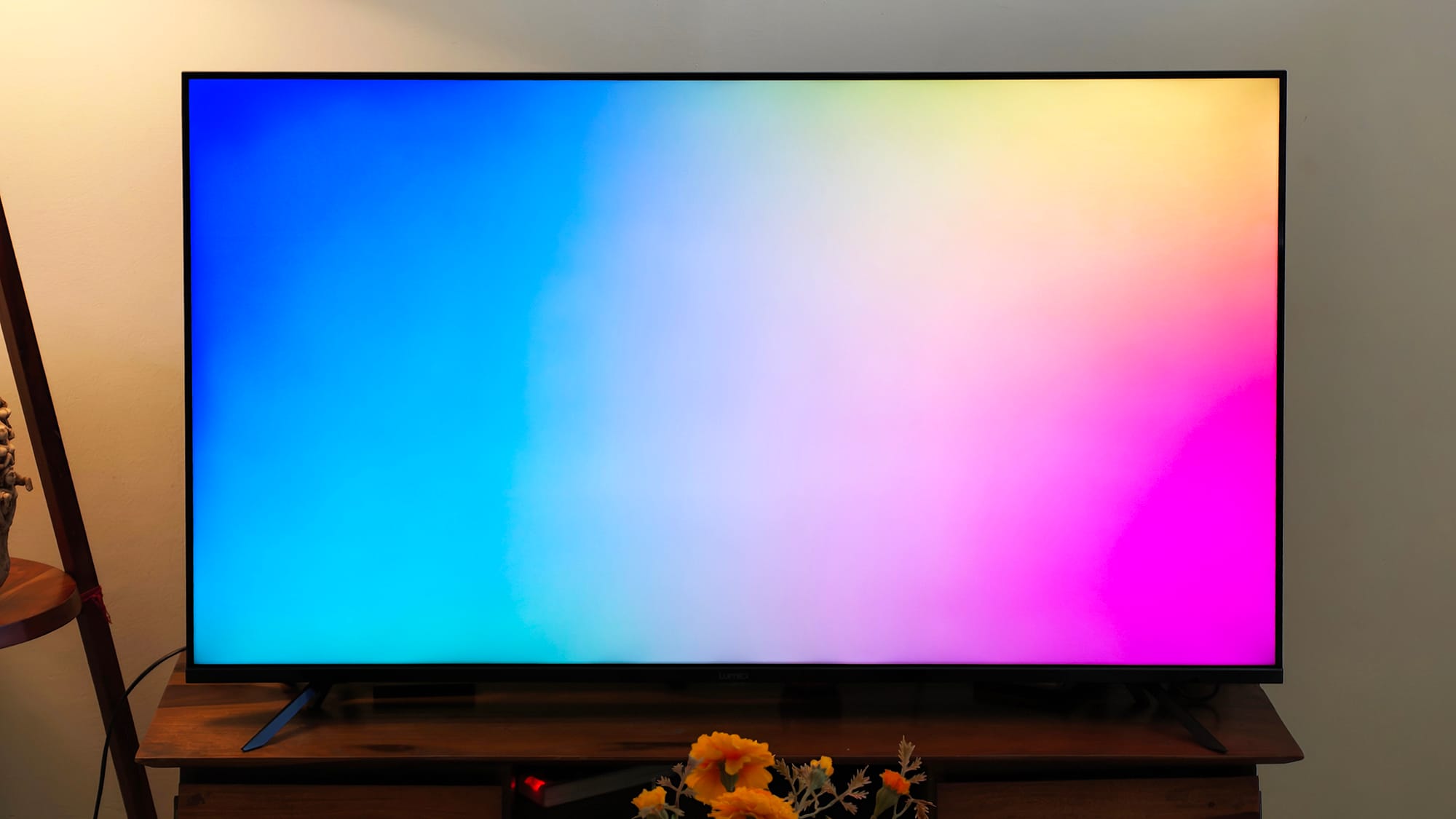
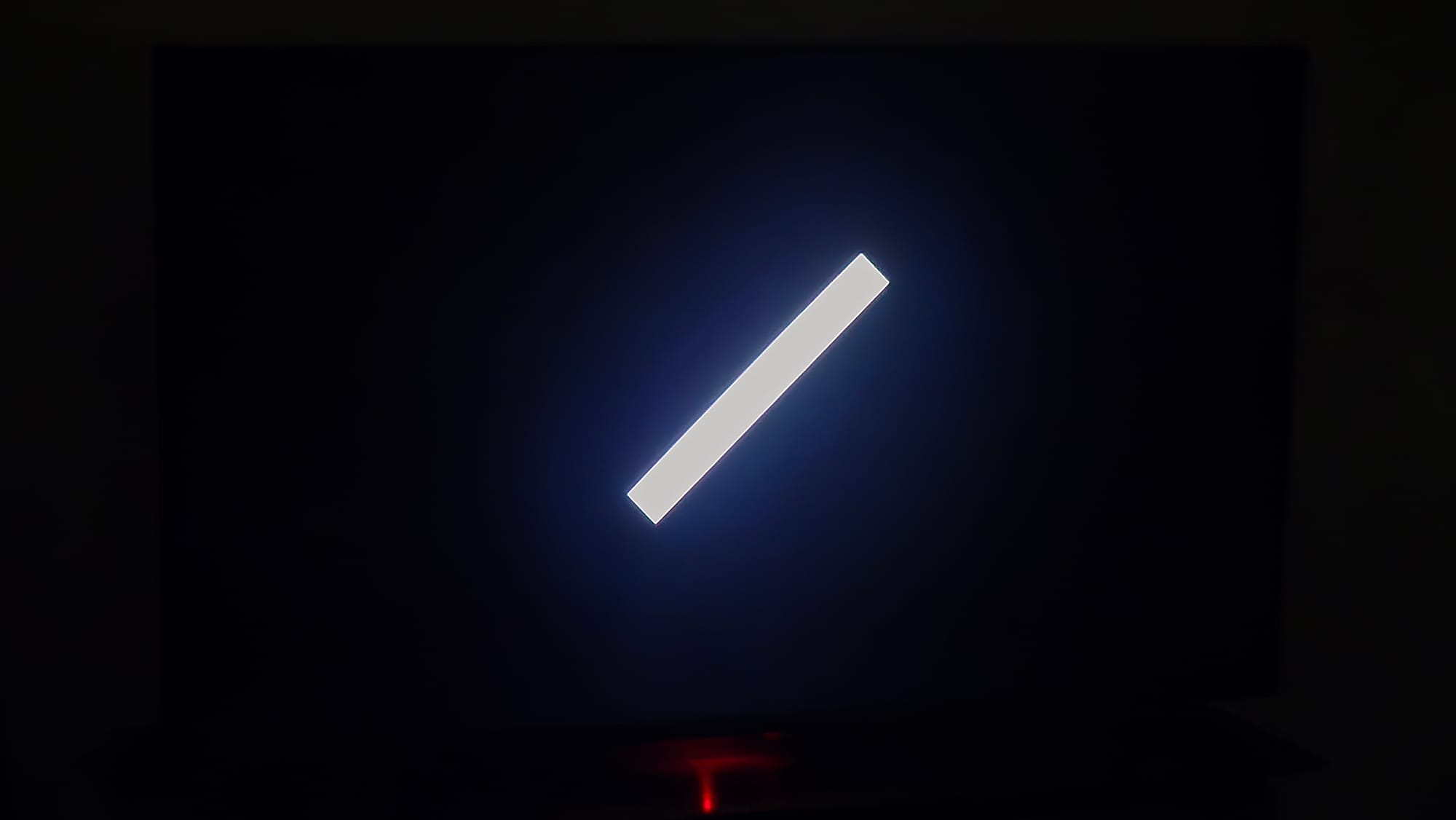
Credits: Athenil Media
For daytime viewing, the brightness feels sufficient, and the panel's reflectivity does not easily become a distraction. Closing the blinds naturally helps with visibility and contrast. Colours feel adequately (and, not excessively) saturated and are easy on the eyes over long sessions.
My one reservation is colour accuracy. There's a subtle warmth to the whites, and as someone particular about this, I noticed it.
In fairness, that warmth is partly correct behaviour — the D65 video standard for white is meant to look slightly warm.
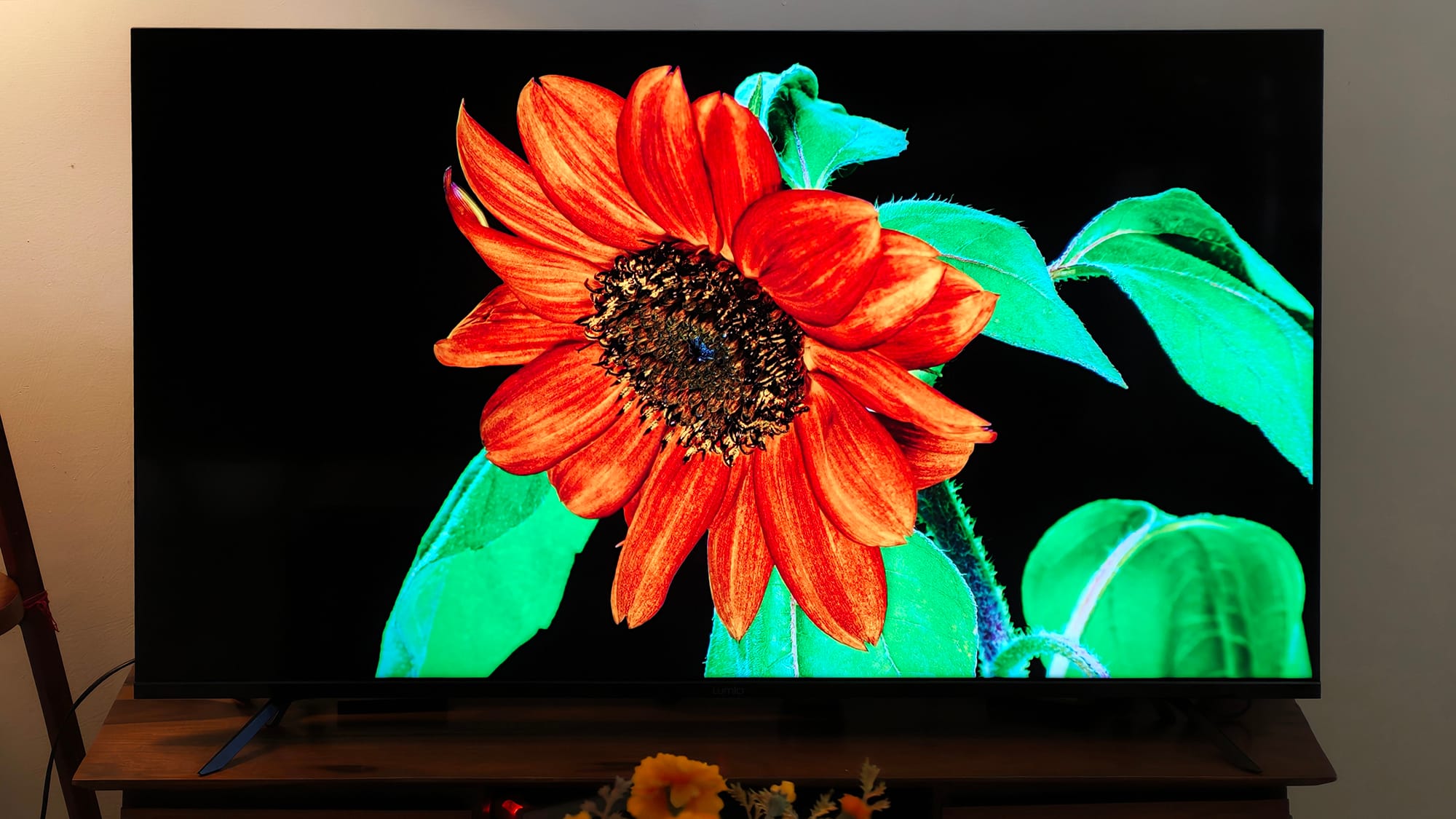
But the Vision 9 leans a touch warmer than what I would prefer it to be, even while watching in the Vivid mode. The good news is that the TV's settings let you fix gamma, hue, and saturation to your liking.
It's possible that most viewers will never notice, but calibration sticklers, like me, might want to spend an evening with the settings.
One genuine quirk: HDR content on YouTube occasionally looked off, with highlights blown out, likely due to the tone-mapping limitations of HDR10 or HLG. It may also be because of certain videos.
In contrast (pun unintended), Dolby Vision and HDR10+ content across the streaming apps don't have the problem, so it's specific rather than systemic.
One more thing to note: the option to toggle motion smoothing or interpolation was hidden behind a less familiar "MJC" menu. It's turned off by default, which is a good thing, but some people might want to experience smoother videos, especially while watching sports, making use of the 144Hz refresh rate.
Sound is the real surprise of the package
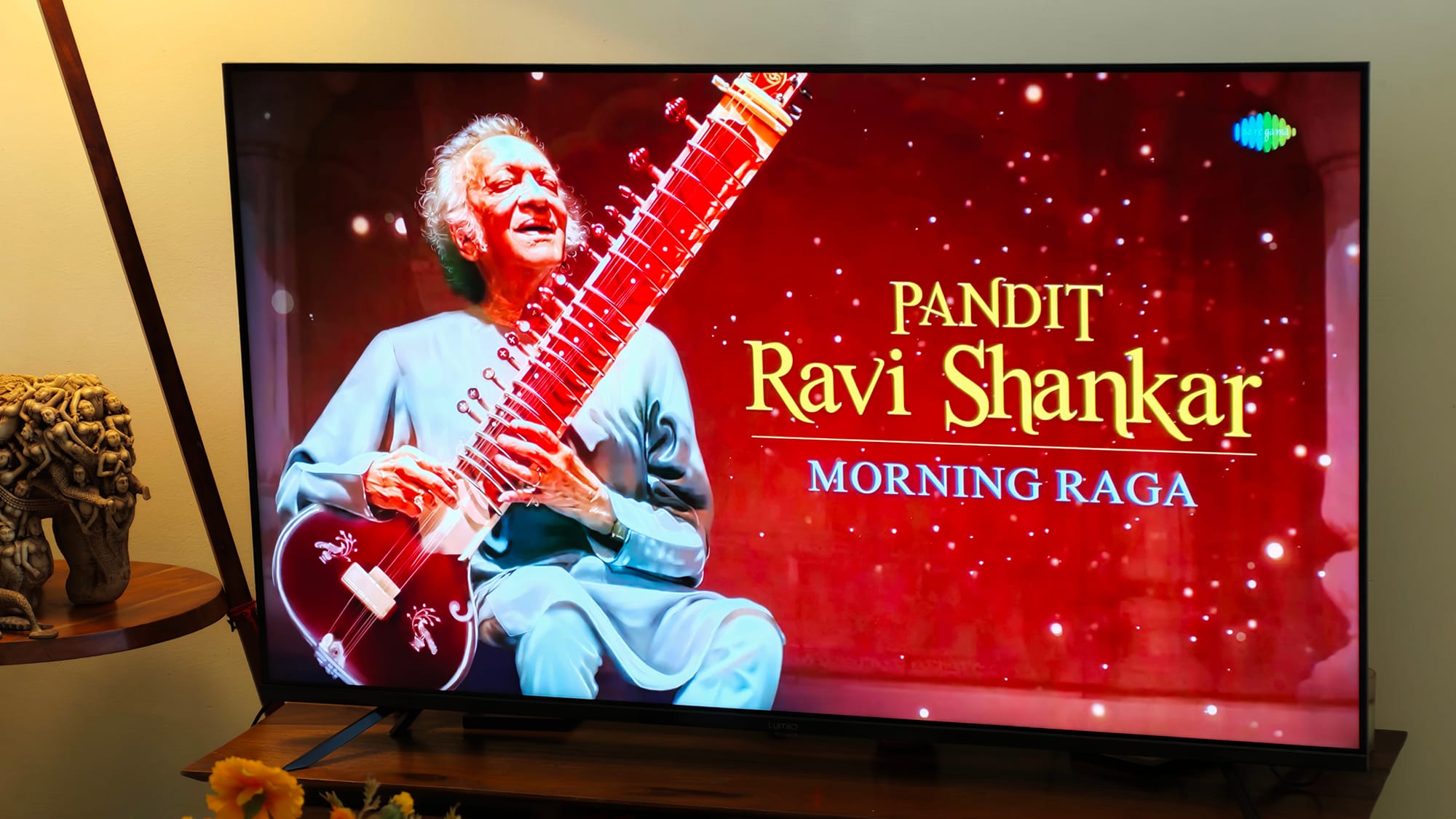
If the picture is good, the audio on Vision 9 is truly standout.
While I wasn't expecting it to be as impressive as the 50W hexa-driver setup with twin subwoofers on the larger model, the 55-inch doesn't leave any room for disappointment.
It produces a sound that's full, roomy, and genuinely room-filling. The mids are well tuned, voices stay clear, and the upper bass has real body. At about 30 on the volume dial (of 100), it comfortably filled my 250-square-foot living-dining space without audible distortion.
That's a substantial leap over my older Thomson QLED, which sounds thin and artificial by comparison.
Probably the only thing I yearn for is the lack of support for a similar 38Hz sub-bass to the bigger 65-inch unit. But unless you're looking for really rumbling and thumpy bass, this would totally satisfy you, too.
The punchy mid-bass is easily felt. It's still among the better built-in systems I've heard at the price, and many buyers will easily be able to skip a soundbar entirely.
Performance is the Vision 9's not-so-secret weapon
Lumio makes a bold claim of making "India's fastest" TVs. But it's both surprising and comforting that it truly holds up.
The Vision 9 is powered by the MediaTek Pentonic 700, but the real amplifier is the 3GB of RAM.
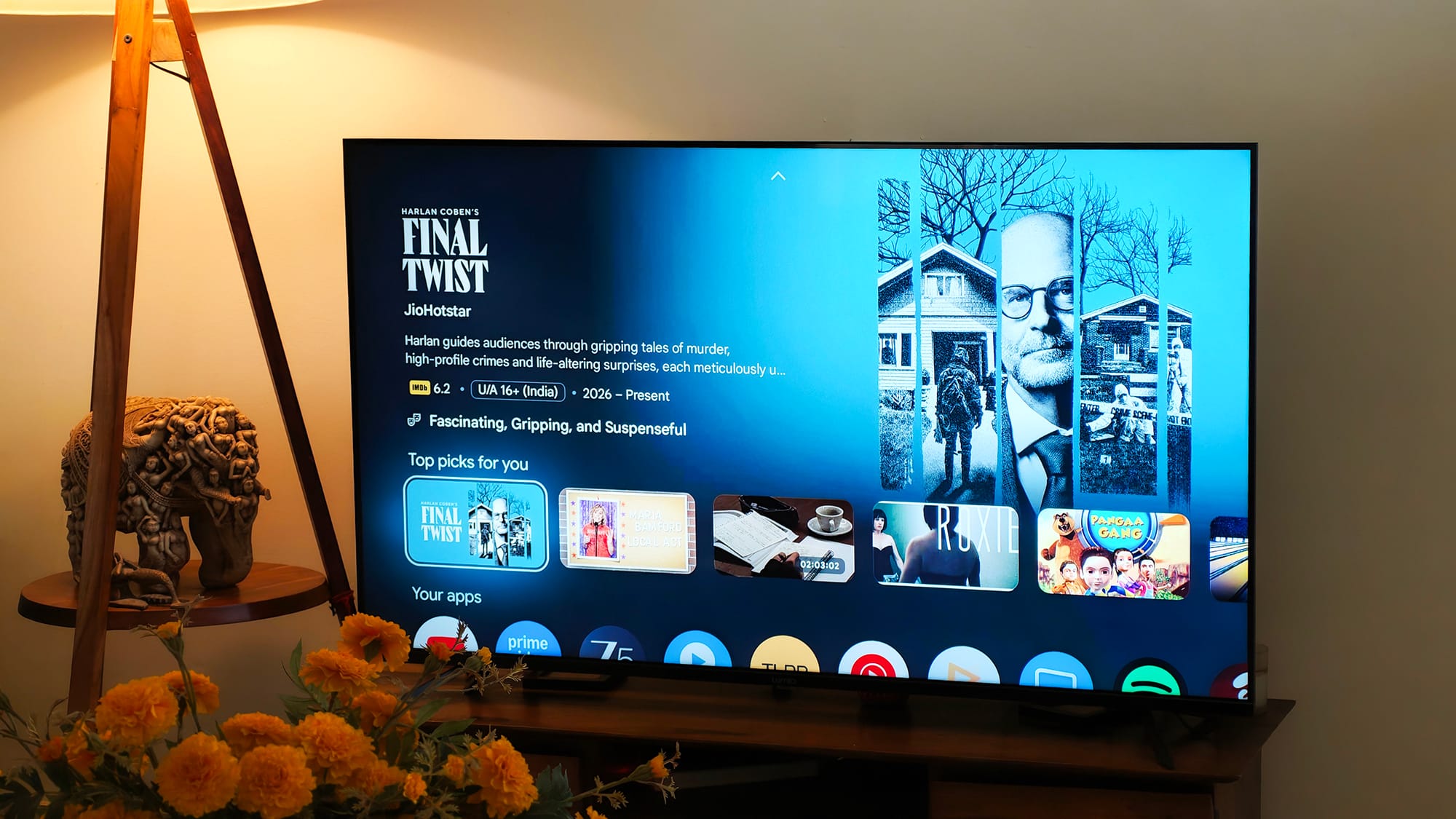
Boot times beat most TVs I've used; the Google TV home screen, along with its cross-app recommendation rows, populate almost instantly. Throughout my time with the TV, I barely saw any lag, stutter, or app crashes.
Netflix opened a couple of seconds quicker than on my QLED. Whether it holds up over months of app updates and a filling storage is the open question with any smart TV, but I hope it ages as well as it launched.
The abundance of I/O, with a treat for gamers (with a caveat)
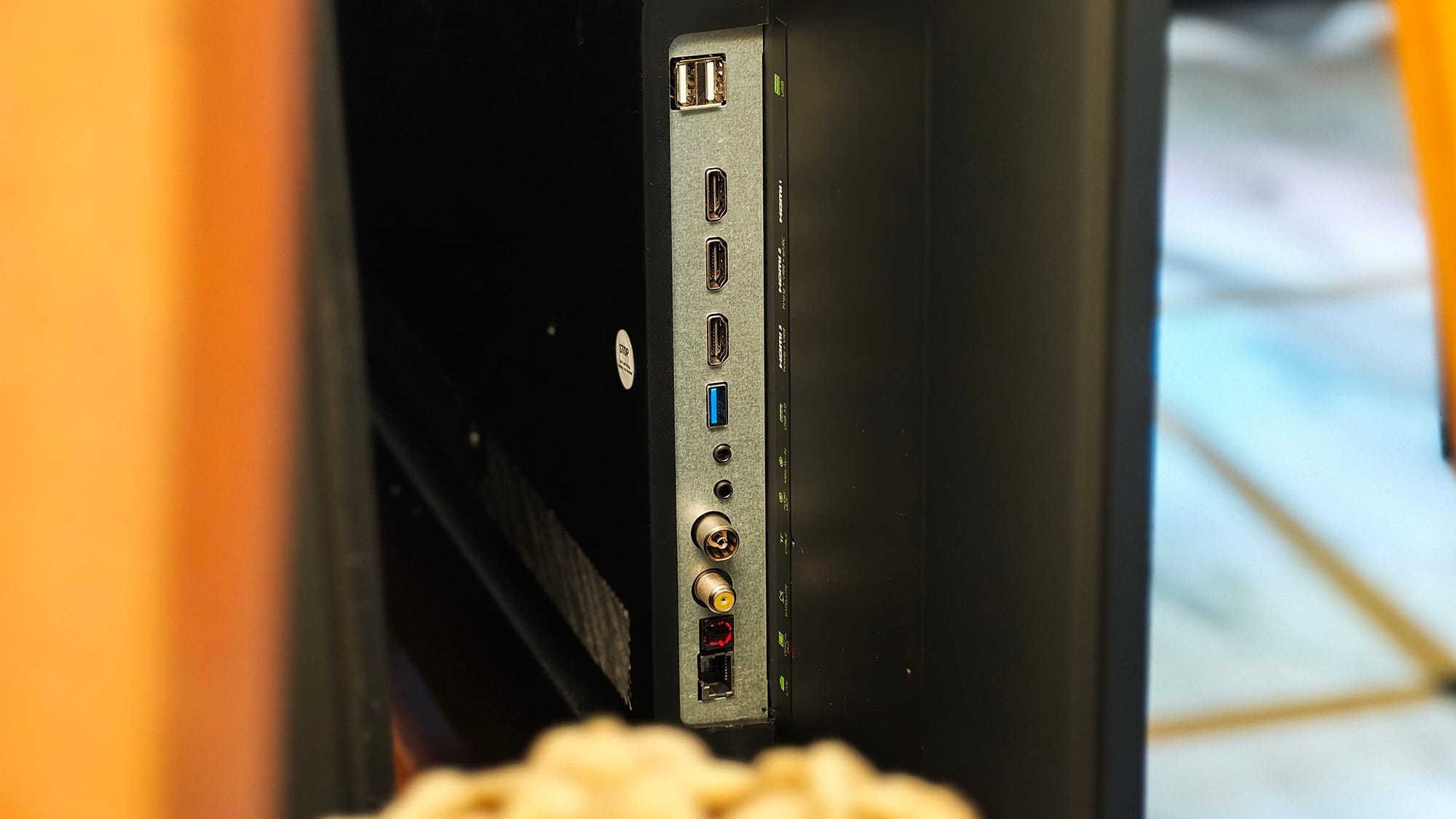
Connectivity options on the Vision 9 are generous.
You get:
- three USB ports (two 2.0, one 3.0),
- three HDMI ports (two HDMI 2.1, one HDMI 2.0),
- Ethernet,
- optical audio,
- a 3.5mm audio-in,
- AV-in via an included 3.5mm splitter, and
- antenna and cable inputs.
Notably, while two of the HDMI ports are full-fat HDMI 2.1 with 144Hz and VRR, only one of those doubles as the eARC port.
That could be a problem for a very small chunk of owners who may want to use multiple consoles with the TV, and then output the audio through a soundbar too. Of course, if you're not in the small share of folks, it wouldn't be an issue.
Interface and features: Polished platform, predictable annoyances
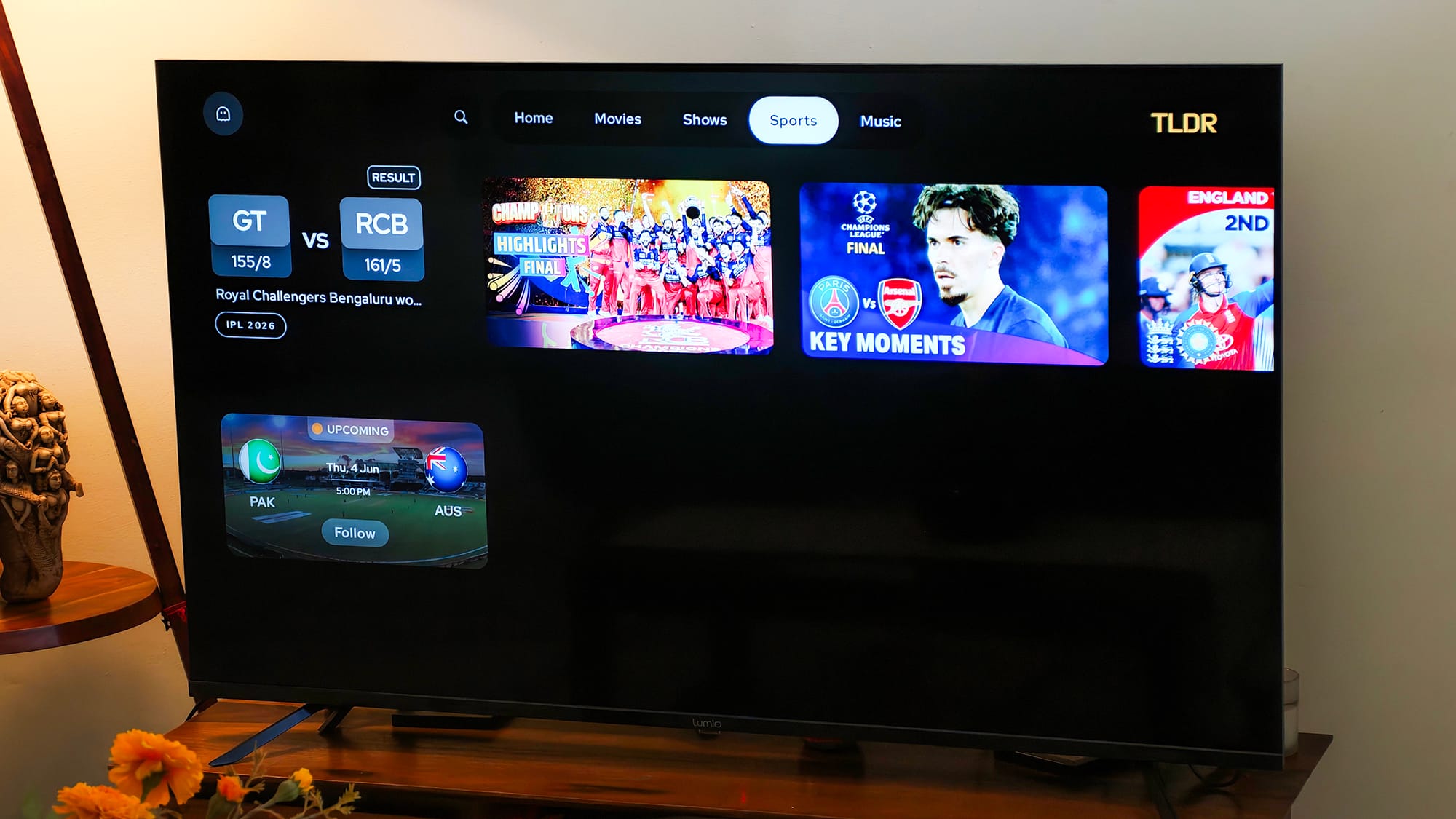
Vision 9 gets Android 14 with the standard Google TV interface with the full app library.
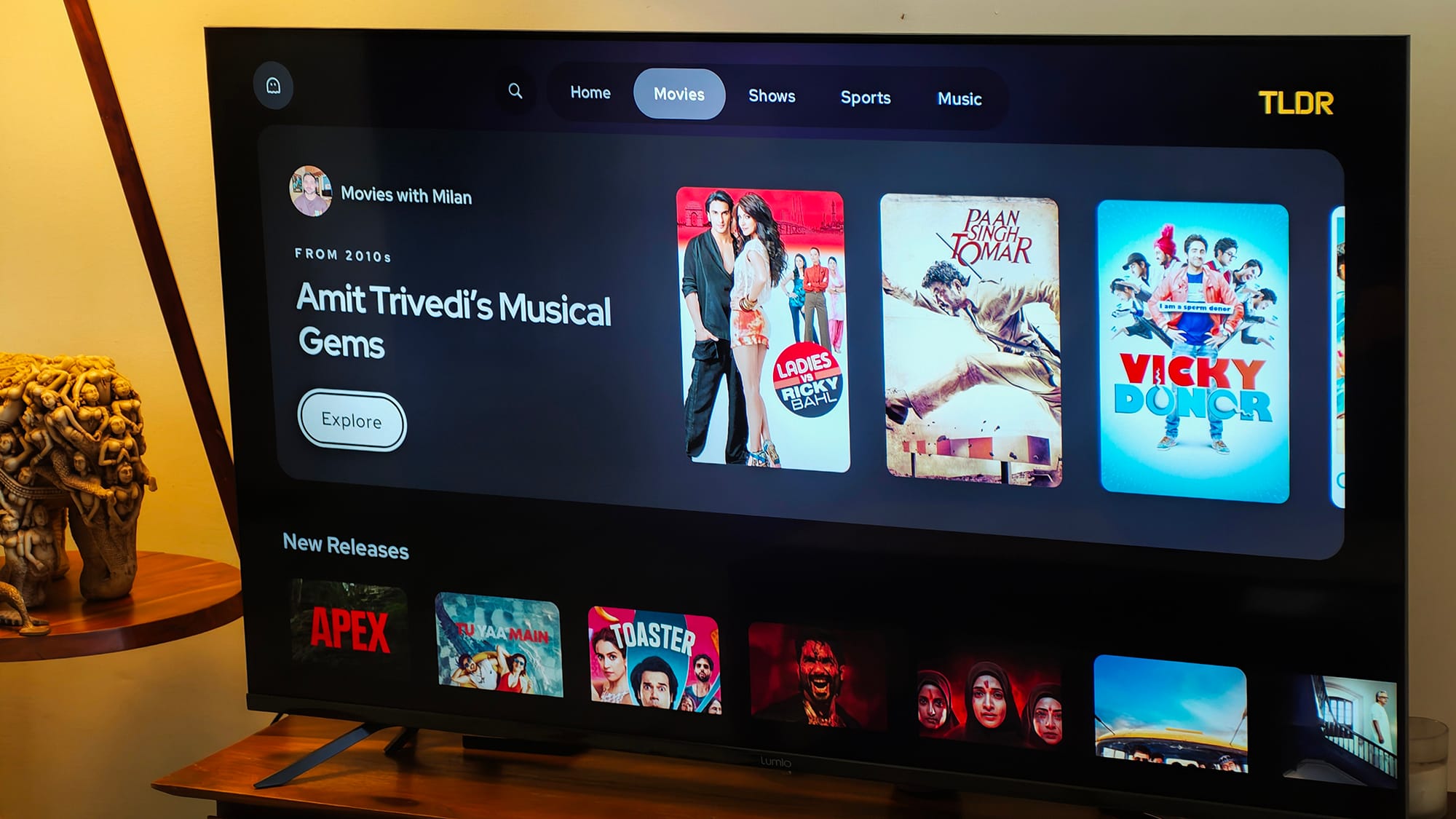
Along with that, Lumio's "TLDR" universal search is front and centre and gets a refreshed interface on this model; it shines brightest for live sports results. Its movie recommendations are plentiful but not yet personalised to my viewing habits.
Lumio also says there's an experimental AI-based companion, named "Neo," which pairs with your phone to surface picks.
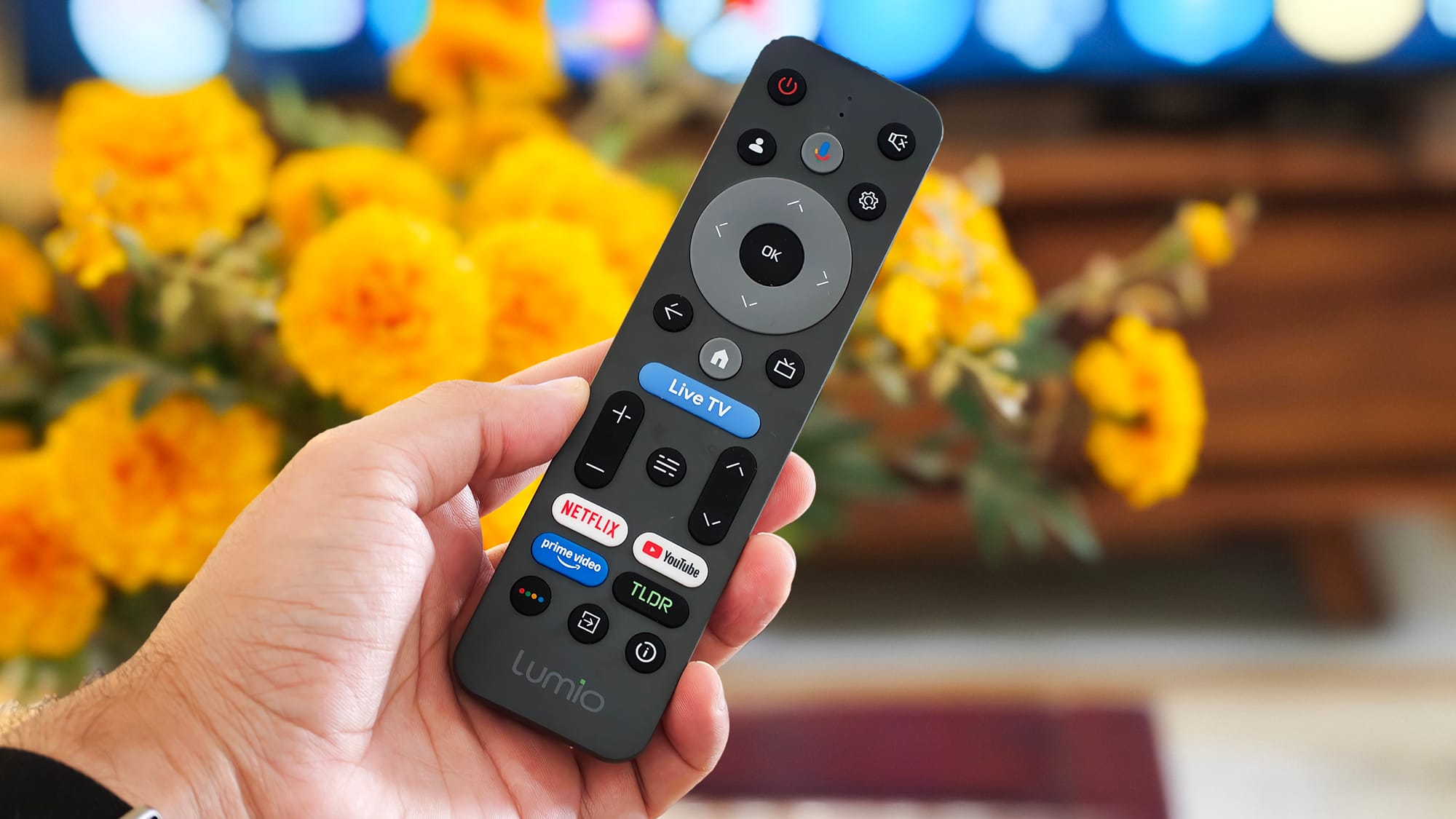
The remote feels premium with plush buttons. The button layout takes a day to memorise.
The software is otherwise standard Google TV, which means home-screen ads you can't fully escape without a custom launcher. I also hit a minor bug where confirming a setting closed the menu entirely instead of stepping back a level.
Build quality is reassuringly flagship: no flex in the rear panel, metal feet, slim bezels, and easy-to-reach physical buttons.
Verdict
At ₹51,999, the Lumio Vision 9 is an easy recommendation for someone stepping up from a basic or budget TV into their first mid-premium set. That's especially true for individuals, couples, and small families who watch head-on.
The audio and the sheer responsiveness are the stars, while the picture quality wins you over with deep contrast and clean dimming. The 144Hz panel makes it promising for console gaming, though I'll reserve final judgment until I've tested it.
Where it's less ideal: large groups crowding the couch at wide angles (the off-axis dullness shows), anyone using it as a PC monitor, and pixel-peepers indifferent to sound and picture quality who'd simply be overpaying.
And those particular about colour should budget an evening for calibration. But those are caveats on an otherwise confident, fast, and surprisingly loud television.