

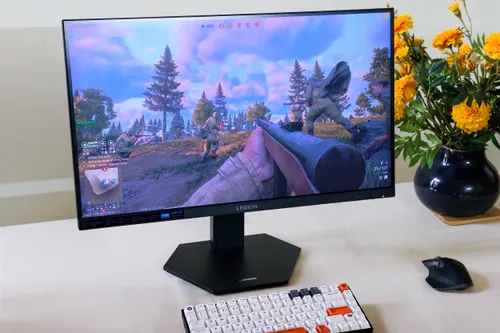


The Indian government doesn't want you to see boobies on Netflix
But it's okay if politicians watch porn in parliament!
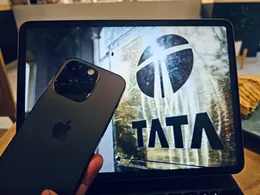
Tata is about to make iPhones in India
Tata is reportedly coughing up $600 million to acquire the factory of Wistron, one of Apple’s global contractor manufacturers, after it shuttered India operations in May 2023.

Feeling stressed? You are more likely to click shady links in a bad email, says research
If your brain is jelly due to overwork. Or you’re crying an Atlantic Ocean after a bad breakup. Or just stressed at the banality of our brief lives on the cosmic scale. Well, don’t click on random email links out of boredom.

Meta aped Twitter with Threads. Pissed Twitter is now taking Meta to the court
Threads is an Instagram off-shoot. And a Twitter copycat. This is how the meeting went at Meta during its development. Team: Hey Mark, how much do we want to copy Twitter for Threads? Mark Zuckerberg: Yes!

OnePlus's 'flagship killer' identity comes full circle with the Nord 3
OnePlus Nord 3 walks in through the door with a polished "flagship killer" attire, compelling specs including a last-gen high-end chipset and cameras shared with its premium siblings, OnePlus 11 and 11R.
Google Search could be smothering your creativity
A Carnegie Mellon University study reveals starting your brainstorming process with Google can be detrimental to the group's creativity.
Teams relying much on search engines often produced inundatingly same, less original ideas due to a cognitive bias called "fixation effect," where seeing popular answers converges our thought process instead of diverging it.

While individuals weren't necessarily dumber with Google, groups of Google users seemed to get stuck in a rut, often coming up with the same common ideas, sometimes even in the same order! Talk about a copy-and-paste creativity crisis.
"This appears to be due to the fact that Google users came up with the same common answers, often in the same order, as they relied on Google, while non-Google users came up with more distinct answers," explained lead author Danny Oppenheimer.
EDITORS' PICKS