
Musk's dollar-shitting car company is apparently a pretty darn racist place
As per a federal lawsuit, black employees were often referred to as “monkey,” “boy,” and “black b*tch.”


Tushar has spent more than a decade writing about technology, more than half of which has been spent cribbing, "where is that damn setting?" If money wasn't a thing, he would be a nomadic bard.
As per a federal lawsuit, black employees were often referred to as “monkey,” “boy,” and “black b*tch.”
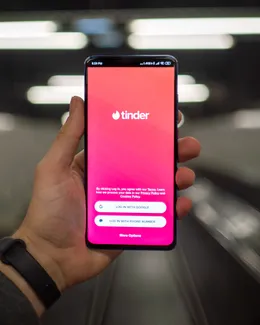
For those among you who have forgotten elementary school maths, that's $500 per month. No, Tinder Select won't match you with an Athenian mami. Or an Atlantean edgelord.

Amazon's not-so-smart smart assistant is finally moving out and getting ready to face the real world with generative AI capabilities. But it's new-found intuitiveness and ingenuity may cost you some bucks.

If you live a particularly luxurious techno-hedonistic life and get yourself the iPhone 15 Pro Max, the camera repairs will cost you more. Upgrades, baby!
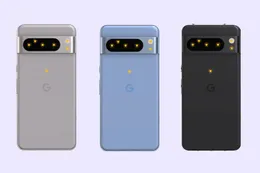
...ly leaked by Google's newly published "Pixel Phone Simulator" tool.
A Carnegie Mellon University study reveals starting your brainstorming process with Google can be detrimental to the group's creativity.
Teams relying much on search engines often produced inundatingly same, less original ideas due to a cognitive bias called "fixation effect," where seeing popular answers converges our thought process instead of diverging it.

While individuals weren't necessarily dumber with Google, groups of Google users seemed to get stuck in a rut, often coming up with the same common ideas, sometimes even in the same order! Talk about a copy-and-paste creativity crisis.
"This appears to be due to the fact that Google users came up with the same common answers, often in the same order, as they relied on Google, while non-Google users came up with more distinct answers," explained lead author Danny Oppenheimer.
EDITORS' PICKS